Understand capacity
Read plain-language explanations of stamina, effort, breathing, and the ways training interacts with an ordinary week.
Explore physiologyVol. 1, 2026 · Indonesia
Naluri is an editorial guide to stamina, sports physiology, and functional training for men over 35—quietly practical, evidence-aware, and grounded in everyday Jakarta life.
Read the field notes
A reading map
Read plain-language explanations of stamina, effort, breathing, and the ways training interacts with an ordinary week.
Explore physiologyFind adaptable ideas for strength, mobility, and movement that can fit around work, family, heat, and travel.
Browse training notesUse journal essays, questions, and glossary entries to make more informed decisions without chasing dramatic promises.
Visit the journal
Origin note
Naluri began with a simple editorial question: what does useful fitness look like when life is already full? Our answer starts with observation—sleep, joint confidence, breathing, stress, and the practical demands of a city week.
We write for learning, not diagnosis. When symptoms, medication, or a long-standing condition affect exercise decisions, qualified local professionals remain an important part of the conversation.
Read our storyA short history
We collected recurring questions from men balancing training with long workdays and family responsibilities.
We turned technical concepts into readable notes while keeping uncertainty and context visible.
We compare simple practices by how clearly they fit real schedules, spaces, and energy levels.
We publish the useful patterns and leave room for readers to adapt them thoughtfully.
From the journal

What changes when breathing is treated as feedback rather than a test of will.
12 September 2026
A framework for choosing movements that carry into stairs, bags, and busy days.
28 August 2026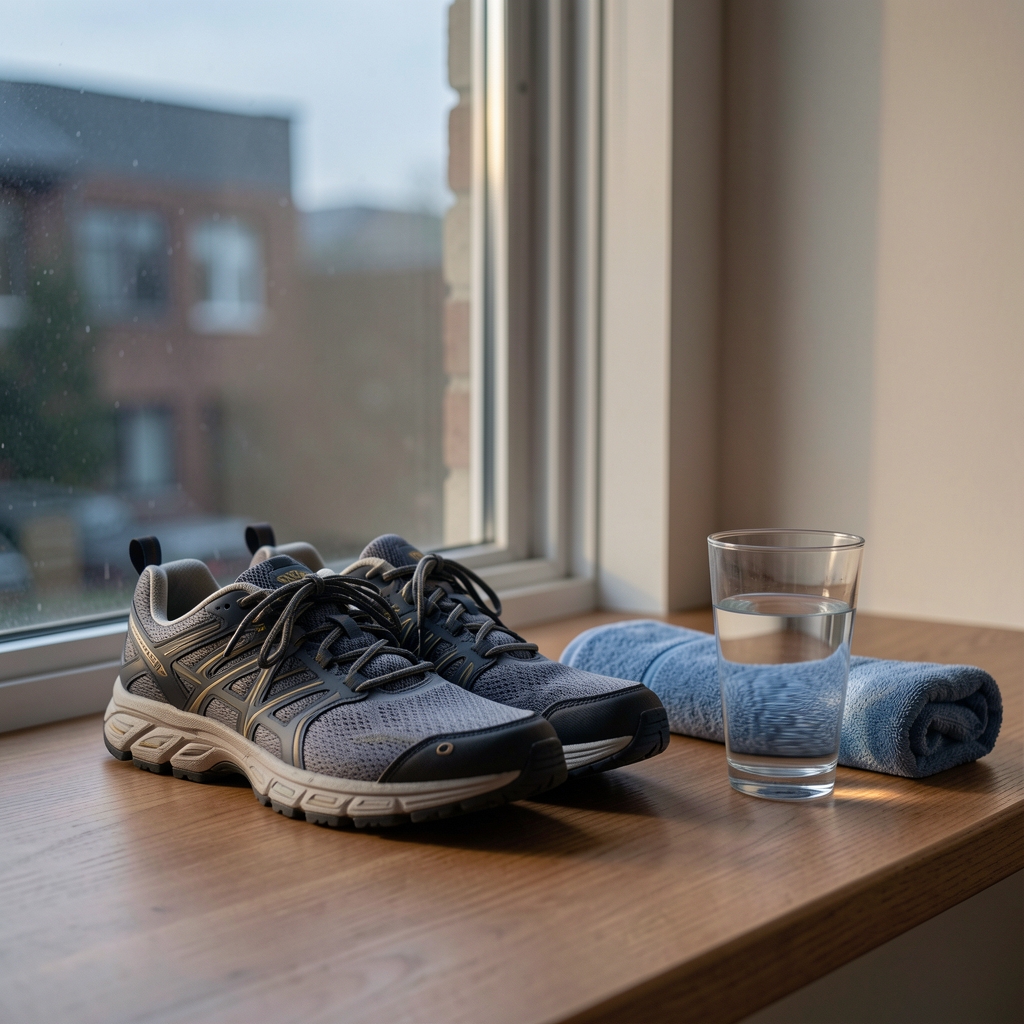
Rest is more than a blank space between workouts; it includes several active choices.
04 August 2026Reader reference
A compact glossary for conversations about training load, perceived effort, mobility, stamina, and recovery.
Open the glossaryThe amount of work you can currently perform with reasonable control and recovery.
Your own description of how demanding a session feels, useful alongside simple records.
“Consistency becomes more realistic when the plan can bend without breaking.”
— Naluri desk, 2026
“A clearer breath can be useful information, not a score.”
— Field note 07
“Progress may begin with a better decision about today.”
— Training notebook
Questions readers bring
Begin with a frequency you can repeat for a month, then adjust one variable at a time.
Read the FAQReturn through easier ranges, lower volume, and patient observation before increasing demand.
Read recovery notesThe journal gathers dated essays and practical explainers from the Naluri editorial desk.
Browse the journalSend a question about the site, an editorial correction, or a topic request through our contact page.
Contact NaluriBrowse practical reading on physiology, mobility, nutrition, and functional training.
Explore Naluri guides