Balance
Confidence is a trainable quality.
Balance practice can be simple, progressive, and connected to real environments.
Good balance is less about standing perfectly still and more about responding calmly when conditions change.
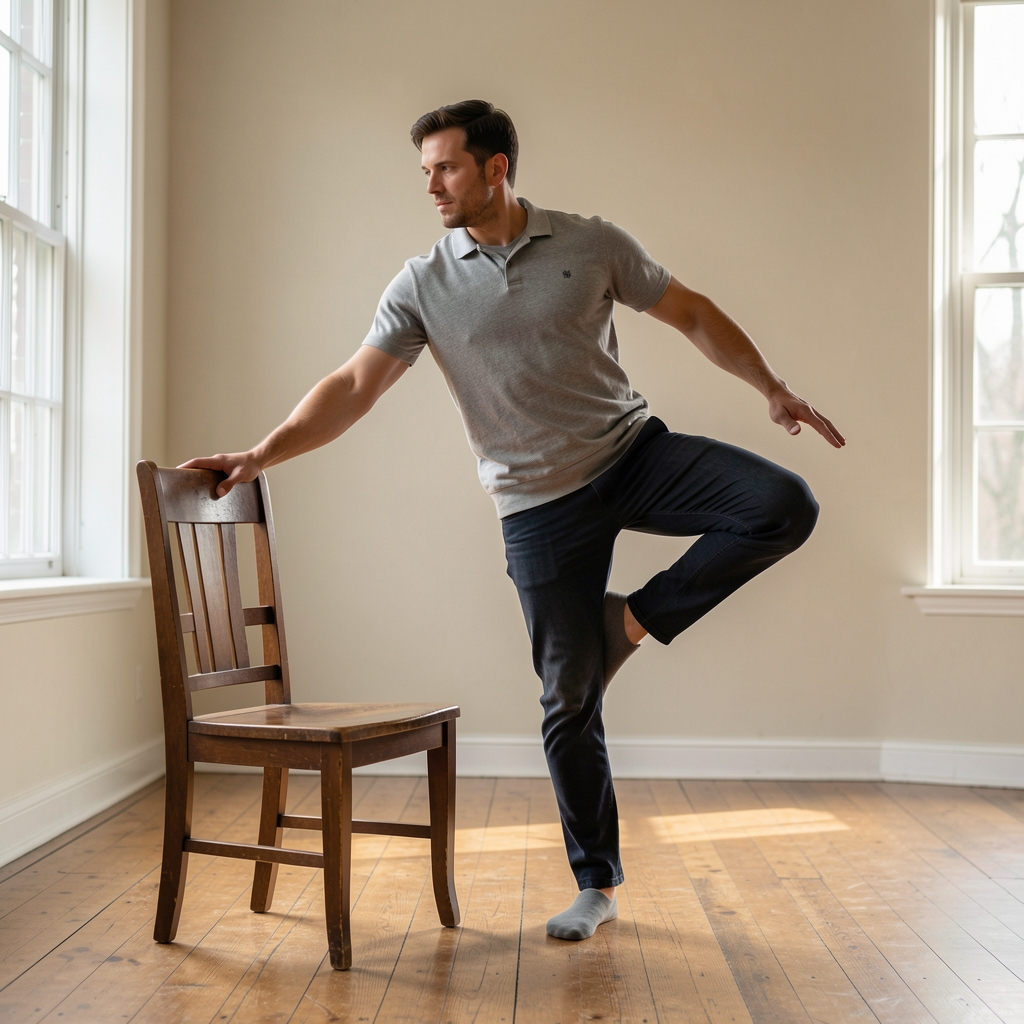
Start supported
Balance work begins with an environment that makes attention possible. Place a sturdy chair, kitchen counter, or rail within easy reach. The purpose is not to remove challenge, but to make the challenge adjustable. A quiet floor, comfortable footwear, and a few uninterrupted minutes help you notice how weight moves from heel to forefoot.
- Stand close enough to support yourself without twisting.
- Keep the first practice quiet, controlled, and easy to repeat.
- Change one variable at a time, such as stance width or head direction.
- Rest before posture becomes hurried or breath becomes irregular.
In Indonesia, practice can fit beside a shaded terrace, a clear living room, or a community garden path. Different surfaces provide useful information, but they should be introduced gradually. If the floor is wet, crowded, or uneven, choose a simpler variation rather than forcing the planned exercise.
Train attention as well as ankles
Balance asks the eyes, feet, trunk, and nervous system to exchange information. A quiet environment and a patient pace often produce more useful learning than a dramatic challenge.
Try noticing three details: where pressure sits under each foot, whether the ribs stay relaxed, and whether the gaze jumps toward the floor. These observations turn practice into a conversation with your surroundings. They also help you select an appropriate next step without relying on a score.
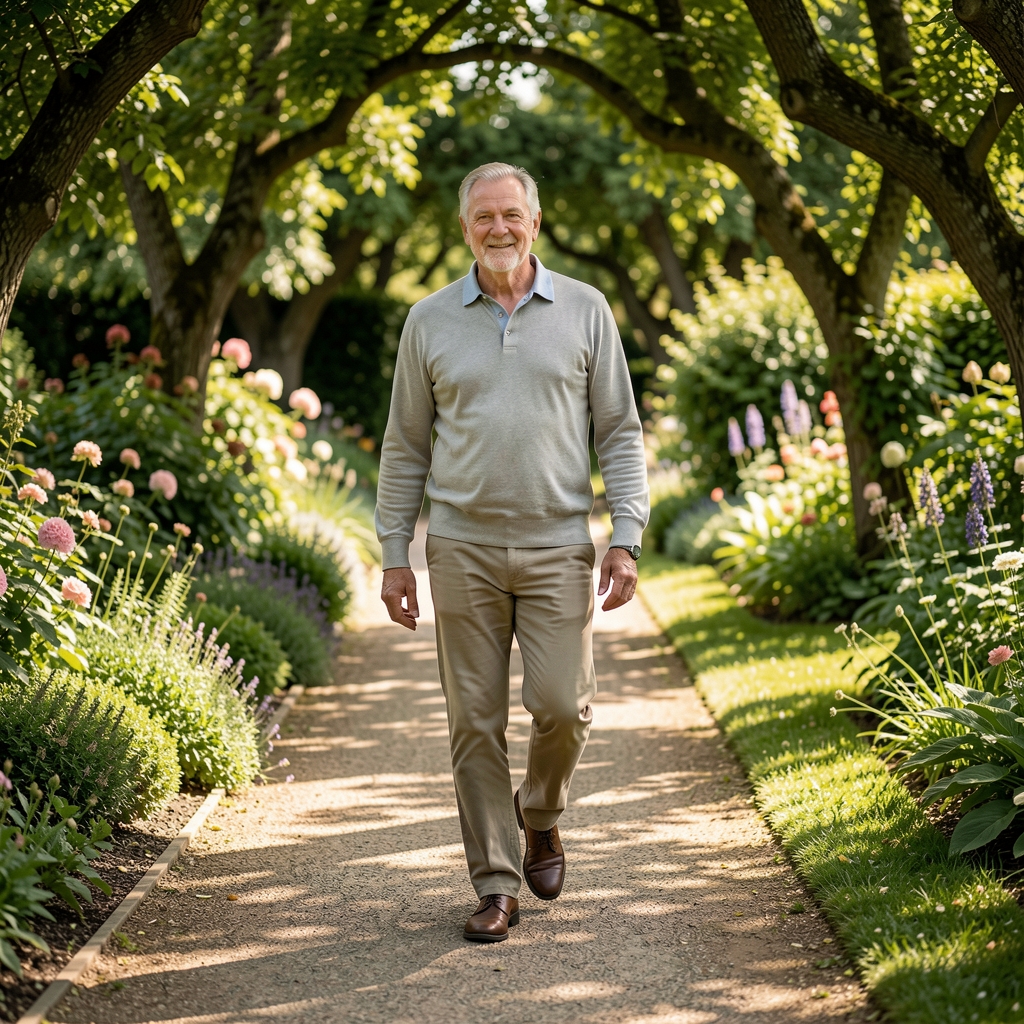
Walking transitions are often more relevant than a long static hold. Step around a chair, pause before changing direction, and allow the arms to move naturally. The aim is to build a vocabulary of small adjustments for daily tasks such as stepping over a threshold, carrying groceries, or turning in a narrow space.
A practical progression
- Orient: look around the practice area and remove loose rugs, bags, or sharp corners.
- Connect: feel both feet and distribute pressure without locking the knees.
- Shift: move weight forward, back, and sideways while keeping a support nearby.
- Step: add slow steps, pauses, and gentle changes of direction.
- Transfer: use the same calm attention during a familiar household or outdoor task.
| Practice | Useful focus | Adjustment |
|---|---|---|
| Wide stance | Breathing and foot pressure | Move feet closer only when steady |
| Weight shift | Control through the hips | Hold a counter lightly |
| Walking turns | Eyes and direction | Use fewer steps and more space |
Use a simple decision rule
If a variation makes you rush, grip, hold your breath, or lose awareness of the room, return to the previous version. That is not a setback; it is useful information about the current dose of challenge. Keep a short note about the surface, footwear, time of day, and level of attention so future sessions are easier to compare.
- Stable and attentive: repeat or add one small variable.
- Uncertain but controlled: shorten the interval and keep support nearby.
- Unsteady or uncomfortable: stop and choose a familiar movement.