How often should I train?
Choose a frequency that fits your present week rather than an ideal calendar. Two strength sessions and regular easy movement can be a meaningful starting point, provided the plan respects health history and recovery.
Reader questions
These answers provide general education and a starting point for better conversations with qualified professionals.
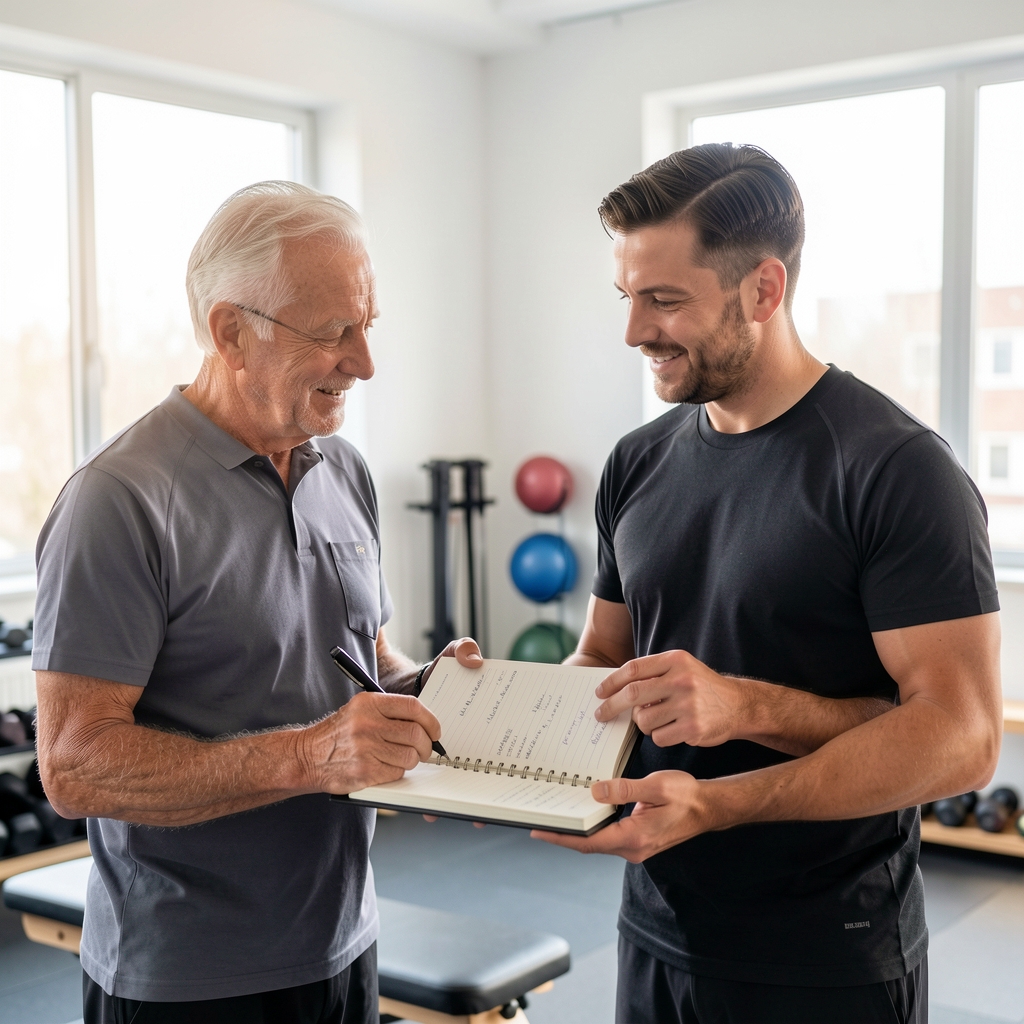
Choose a frequency that fits your present week rather than an ideal calendar. Two strength sessions and regular easy movement can be a meaningful starting point, provided the plan respects health history and recovery.
Yes, adults can continue developing strength, stamina, coordination, and confidence. Progress often benefits from more attention to warm-up, sleep, technique, and gradual loading than it did earlier.
No. A chair, steps, a wall, and a modest load can support many patterns. A gym may add variety, but equipment does not replace consistency or thoughtful progression.
Recovery includes sleep, nourishment, hydration, easy movement, emotional space, and adjusting training when signals change. It is not simply doing nothing between demanding sessions.
Wearables can show useful trends, but readings are estimates. Use them beside perceived effort, symptoms, sleep, and context rather than treating a single number as a diagnosis.
Seek appropriate professional advice for chest pain, fainting, unusual breathlessness, new weakness, acute injury, or symptoms that persist or worsen during rest.
Write to the Naluri desk with a general editorial question. We cannot diagnose conditions or provide emergency support.