Position
Set the feet, ribs, pelvis, and hands before adding speed or load. A stable starting position makes later adjustments easier to understand.
Strength
Strength training after 35 can be organised around technique, consistency, and useful everyday tasks.
Strength is a practice of producing force with attention, not a race to lift the largest load.
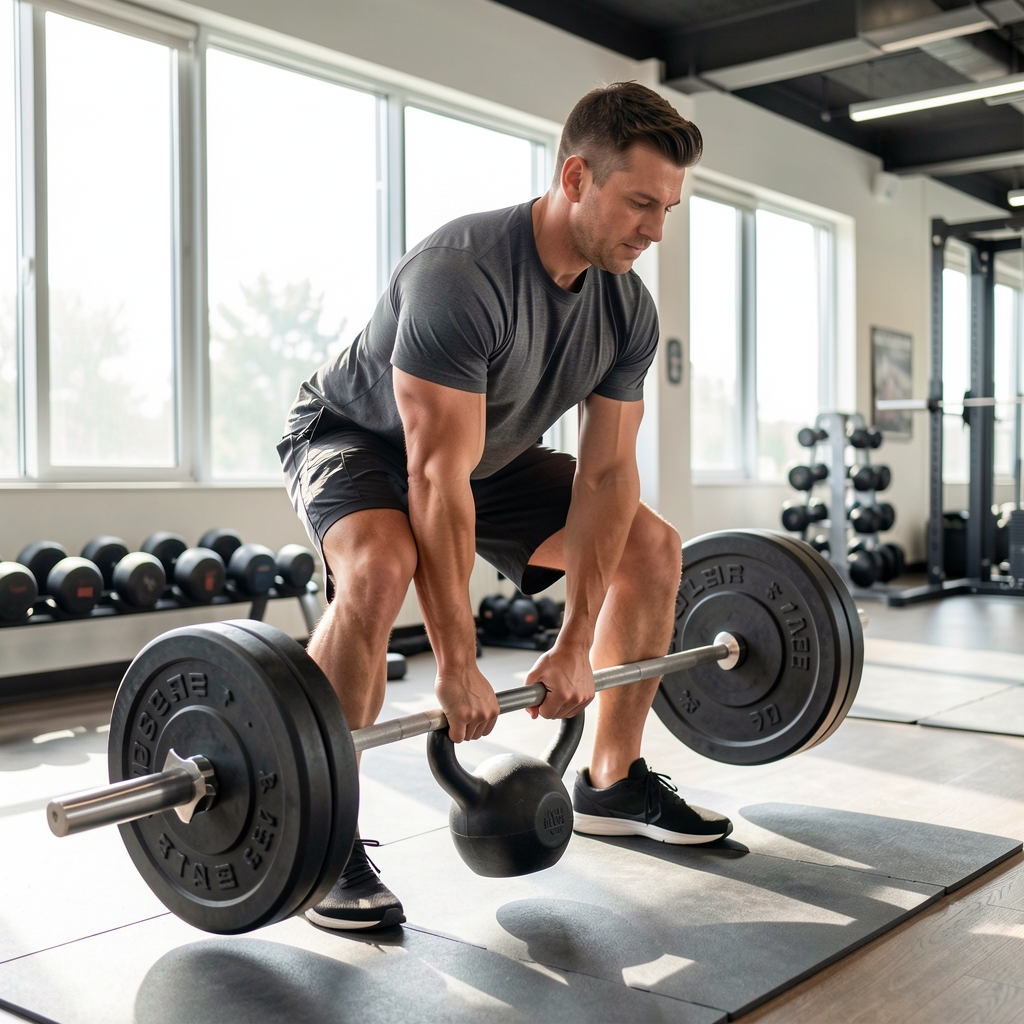
A useful strength session has a clear entry point, a manageable amount of work, and a reason for each exercise. Squatting, hinging, pushing, pulling, carrying, and bracing can be adapted to a home, a modest gym, or an outdoor setting. The equipment matters less than the ability to repeat the movement with steady breathing and a consistent range.
Set the feet, ribs, pelvis, and hands before adding speed or load. A stable starting position makes later adjustments easier to understand.
Move through a range that remains organised. Slower repetitions can reveal where attention fades and where a simpler variation would help.
Add one variable at a time: repetitions, range, resistance, or a small reduction in rest. Keep the change visible in your notes.
| Goal in daily life | Movement family | Accessible starting option |
|---|---|---|
| Rising from a chair | Squat pattern | Slow sit-to-stand with a stable chair |
| Picking up a bag | Hinge pattern | Hip hinge with a light object |
| Placing an item overhead | Press pattern | Wall-supported reach with controlled ribs |
| Carrying groceries | Carry pattern | Short suitcase carry with even steps |
The table is a planning tool rather than a prescription. Choose the version that leaves enough attention for posture, breathing, and the surrounding space. If a movement creates sharp discomfort or changes the way you walk, pause and seek individual guidance.
This structure keeps the session connected to learning. It also creates a practical record when travel, work deadlines, weather, or family responsibilities change the available time. A shorter session can still be informative when its purpose is explicit.
Progress does not need to look dramatic. A slightly cleaner hinge, a more stable step, or the ability to carry an object while keeping the shoulders relaxed are meaningful observations. Naluri recommends descriptive notes over comparisons: write what changed in your movement, not what you think it says about your identity.